
-

Katsi’tsakwas Ellen Gabriel
Katsi’tsakwas Ellen Gabriel is a Kanien’kehá:ka, Wakeniáhton (Turtle Clan), artist, documentarian, and Indigenous human rights and environmental rights activist living in Kanehsatà:ke Kanien’kehá:ka Homelands.
-

Pamela Cross
Pamela Cross is a feminist lawyer who works in the gender-based-violence movement. Pamela brings an intersectional feminist analysis to her work as a researcher, writer, and educator, which is focused on the intersections between gender-based violence, and particularly intimate partner violence, and Canadian legal systems. She has worked with a wide range of women’s equality and gender-based-violence organizations across Canada, sits on Ontario’s Domestic Violence Death Review Committee, and is a frequent media commentator on these issues. Pamela has a long history as a political activist, for which she boasts a healthy criminal record. She lives in Kingston, Ontario with her partner and their cat.
-

Leslie Kern
Leslie Kern is the author of three books about cities, including Feminist City: A Field Guide. She is an associate professor of geography and environment and women’s and gender studies at Mount Allison University. Her research has earned a Fulbright Visiting Scholar Award, a National Housing Studies Achievement Award, and several national multi-year grants. She is also an award-winning teacher. Her writing has appeared in The Guardian, Vox, Bloomberg CityLab, and Refinery29. Leslie lives in Sackville, New Brunswick (Mi’kma’ki) with her partner and cats.
-

Gabriel Allahdua
Originally from St. Lucia, Gabriel Allahdua worked as a migrant farm worker in the Seasonal Agricultural Worker Program for four years, from 2012 to 2015, before leaving the program to seek permanent residency in Canada. Now a leading voice in the migrant justice movement, Allahdua is an organizer with Justicia for Migrant Workers and an outreach worker with The Neighbourhood Organization, providing services to migrant workers across southwestern Ontario. He lives in Toronto with his two adult children and his grandson.
-
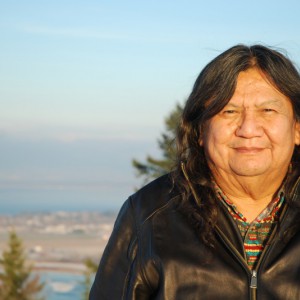
Arthur Manuel
Arthur Manuel fought for decades for Indigenous land and human rights in Canada and internationally. He participated in the United Nations Permanent Forum on Indigenous Issues from its inception in 2002 and served as spokesperson for the Indigenous Network on Economies and Trade (INET) from 2003 to 2016. Working through INET, Manuel succeeded in having the struggle for Aboriginal title and treaty rights injected into international financial institutions, setting important precedents for Aboriginal title and rights in Canada. Manuel was a spokesperson for the Defenders of the Land.
-

bell hooks
bell hooks (1952-2021) is the author of numerous critically acclaimed and influential books on the politics of race, gender, class, and culture. Celebrated as one of America’s leading public intellectuals, she was a charismatic speaker who divided her time among teaching, writing, and lecturing around the world.
-
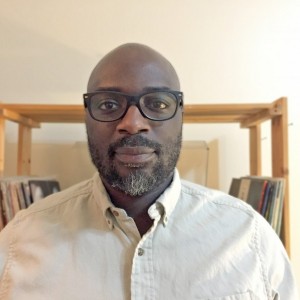
David Austin
David Austin is the author of Dread Poetry and Freedom: Linton Kwesi Johnson and the Unfinished Revolution and editor of Moving Against the System: The 1968 Congress of Black Writers and the Making of Global Consciousness and You Don’t Play with Revolution: The Montreal Lectures of C.L.R. James. Fear of a Black Nation: Race, Sex, and Security in Sixties Montreal is the 2014 winner of the Casa de las Americas Prize. His writing engages the work of C.L.R. James, Frantz Fanon, Sylvia Wynter, Hannah Arendt, Walter Rodney, and Linton Kwesi Johnson in relation politics, poetry and social movements. A former youth worker and community organizer, he has also produced radio documentaries for the Canadian Broadcasting Corporation’s Ideas on C.L.R. James and Frantz Fanon. He currently teaches in the Humanities, Philosophy, and Religion Department at John Abbott College and in the McGill Institute for the Study of Canada.
-

Ricardo Tranjan
Ricardo Tranjan is a political economist and senior researcher with the Canadian Centre for Policy Alternatives. Previously, Tranjan managed Toronto’s Poverty Reduction Strategy and taught at universities in Ontario and Quebec. His early academic work focused on economic development and participatory democracy in Brazil, his native country. His current research is on the political economy of social policy in Canada. Ricardo holds a PhD from the University of Waterloo, where he was a Vanier Scholar. A frequent media commentator in English and French, he lives in Ottawa.
-

Steven High
Steven High is a professor of history at Concordia University in Montreal where he co-founded the Centre for Oral History and Digital Storytelling. He has authored a number of books and articles on structural and mass violence as well as deindustrialization as a political, socio-economic, and cultural process. He is currently the head of the transnational “Deindustrialization and the Politics of Our Time” (DEPOT) research project which brings together researchers, museum professionals, archivists, and trade unionists across Europe and North America.
-
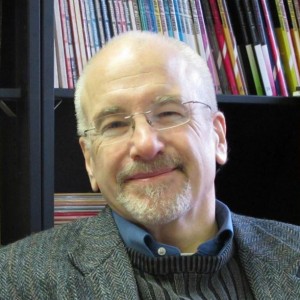
Ian McKay
Ian McKay is the L.R. Wilson Chair in Canadian History at McMaster University and the author of the award-winning Reasoning Otherwise: Leftists and the People’s Enlightenment in Canada, 1890–1920 and the co-author of Warrior Nation: Rebranding Canada in the Age of Anxiety.